3 Reds in the Opener: New 2026 VAR Rules
Winning Score Team Published Tue 16 Jun Updated Tue 16 Jun
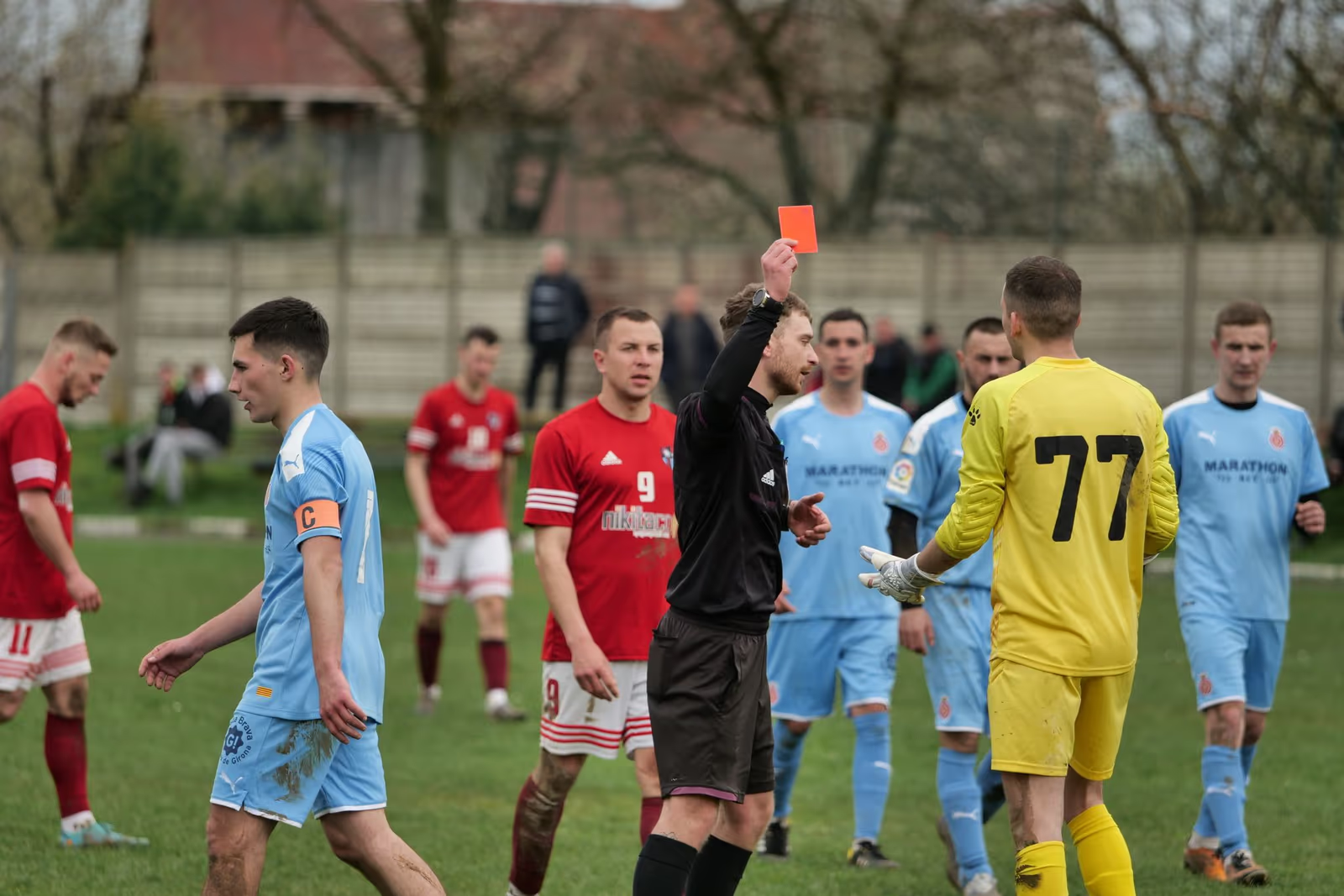
The entire 2018 World Cup, all 64 matches, produced four red cards.
The 2022 World Cup produced four as well.
The 2026 World Cup handed out three in the opening match alone.
This is not a rougher game.
It is the rules that have changed — and the whole tournament will be played under them.
The short version (20 seconds)
- The opener, Mexico’s 2-0 win over South Africa at the Azteca, produced three red cards — a first in 96 years
- The cause was not violence but the IFAB 2026/27 laws, enforced strictly at the World Cup
- VAR’s scope is wider — it can now review second yellows, mistaken identity, corner awards and pre-set-piece fouls
- New rules punish time-wasting, dissent and cynical fouls without mercy
- A three-minute hydration break in every match turns the game from two halves into something like four quarters
Three reds in one night
The 2026 World Cup opened with Mexico against South Africa at Estadio Azteca on 11 June. The hosts won 2-0, refereed by Brazil’s Wilton Sampaio.
But the talking point was three red cards.
| Player (team) | Reason | How it was given |
|---|---|---|
| Yaya Sithole (South Africa) | Denying an obvious goal-scoring chance (DOGSO) | Straight red, ~49’ |
| Themba Zwane (South Africa) | Violent conduct, off-the-ball strike to the face | Red after a VAR pitchside review, ~83’ |
| Cesar Montes (Mexico) | Deliberate tactical foul to stop a chance | Straight red, ~90+1’ |
Sithole’s first red was barely disputed — a clear foul denying a goal-scoring chance (LiveMint).
Zwane’s second was the key one — an off-the-ball incident the on-field referee missed, which VAR flagged and judged as violent conduct.
Montes’s third became the controversy. Former player Kevin-Prince Boateng called it a “joke”, arguing it was a standard tactical foul worth only a yellow. But under the new directives it was a clear signal that the line for cynical fouls has been drawn far tighter.
The context is what matters most — no World Cup opener in 96 years had ever produced three reds. When red cards cluster in a game that was not unusually violent, the thing that changed is the officiating, not the players.
What VAR can do more of in 2026
The surge traces back to IFAB, the body that sets football’s laws, and its 2026/27 edition, brought in early for the World Cup.
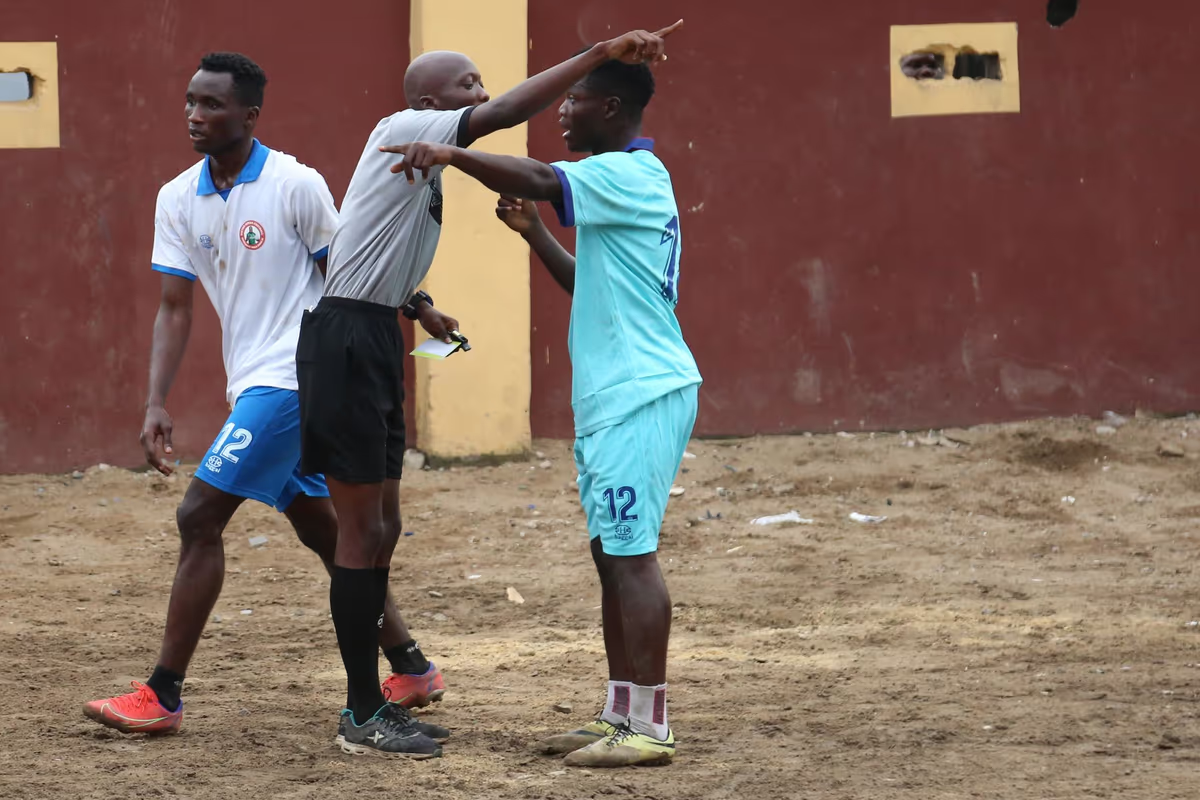
Where VAR once touched only goals, penalties and straight reds, its scope has now widened to allow a pitchside review in new cases (The Guardian):
- Second yellow cards — VAR can check whether a second yellow that triggers a red was clearly wrong, where before it was banned from yellows entirely
- Mistaken identity — it can correct a card shown to the wrong player
- Corner kicks — competitions may let VAR review a clearly wrong corner, if it can be done without delaying the restart
- Pre-set-piece fouls — IFAB clarified in May 2026 that VAR can review attacking-team fouls before a set-piece, such as holding and blocking in the box, if they affect a goal or penalty (IFAB)
The definition of “violent conduct” was not rewritten — but the eyes watching it multiplied. Zwane’s red is the direct result: an off-the-ball moment that would likely have escaped notice in 2022 was caught in 2026.
The rules that punish time-wasting and dissent
Beyond VAR, IFAB added a suite of behavioural rules fans will spot immediately (IFAB):
- A 5-second count — if a player deliberately delays a throw-in or goal kick, the referee counts down five seconds by hand. Fail to restart and a throw is reversed, while a delayed goal kick becomes a corner for the opposition
- A 10-second substitution — a substituted player must leave by the nearest line within 10 seconds. Dawdle and the replacement is barred until a full minute of play has passed, briefly forcing ten men
- A 1-minute injury exile — an outfield player treated on the pitch (goalkeepers and head injuries aside) must stay off for one minute after the restart, to deter feigned injuries
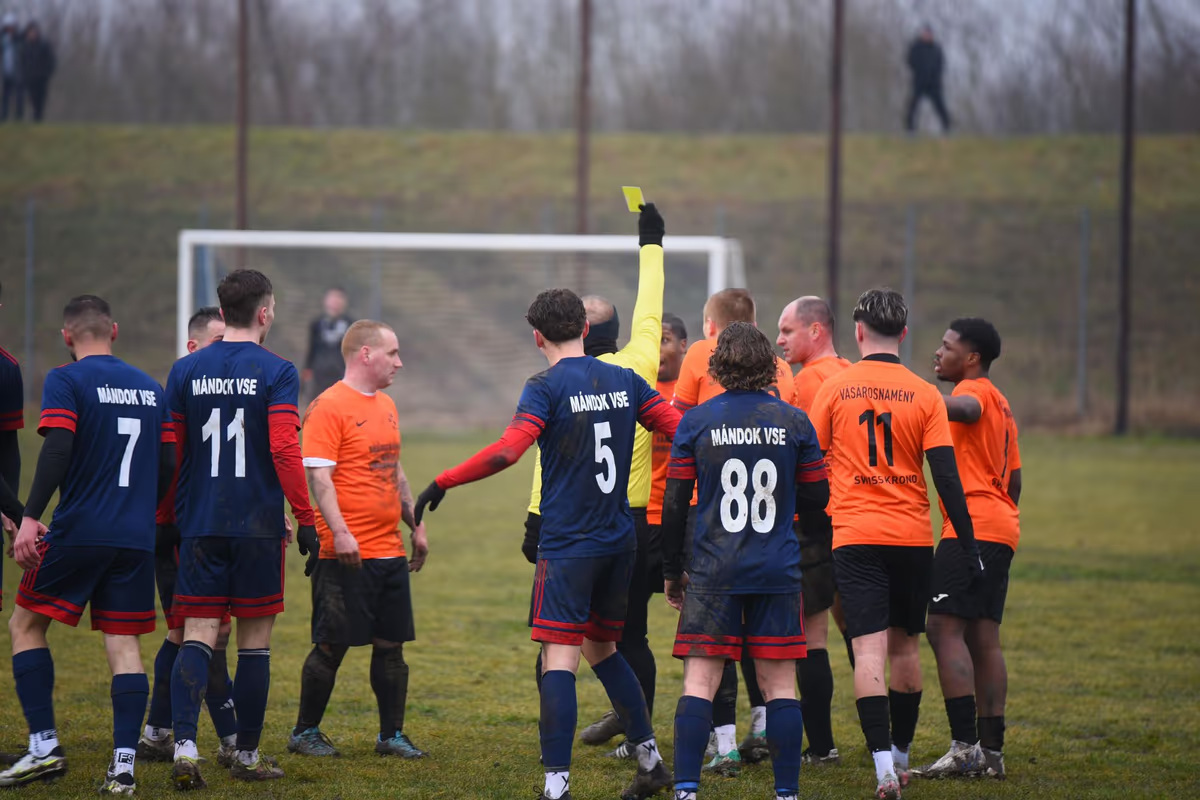
- Anti-dissent reds — leaving the field to protest, or covering the mouth with a hand or shirt during a confrontation, is now a straight red
- Only the Captain — at a major incident the referee marks an exclusion zone of about 4.5 yards, and only the captain may enter; anyone else who joins a protest is booked
Together, that is why a single game now accumulates cards far faster than before.
Water breaks, ref mics and the fan experience
Another visible change is the hydration break. FIFA mandates a roughly three-minute break midway through each half, around the 22nd and 67th minutes, in every match, regardless of heat or a closed roof (FIFA).
These used to be at the referee’s discretion in extreme heat only. Now they are predictable pauses that managers use to reset tactics. France coach Didier Deschamps said football has effectively become a “four quarters” game, and some broadcasters have drawn criticism for cutting to full-screen ads during them.
Fans will also notice referees using a microphone to explain VAR decisions to the stadium and the TV feed directly. On opening night, Sampaio’s English explanation of Zwane’s red over the PA left players and fans baffled and became the tournament’s first viral meme (Times of India).
How to watch 2026 and understand it
The overall picture is a game that stops more often, from water breaks and more frequent checks, but where each individual VAR review is quicker, because the technology decides fast rather than dragging out offside lines.
The thing to remember while watching is this: when you see a red card or an unusual review, do not rush to blame dirty play or a bad referee. Most of the time the new rulebook is simply doing what it was built to do — strip out time-wasting and cynical fouls so attacking football can flow.
Blame the system, not the player, and this tournament becomes far more enjoyable to follow.
Read on about the VAR and semi-automated offside technology behind the decisions, and the new 48-team format reshaping the World Cup, or see every group on the 2026 World Cup groups page.
Sources
- Every new World Cup rule in full — expanded VAR, new red-card offences — The Guardian, 2026
- IFAB introduces further measures to improve match flow and player behaviour — IFAB, 2026
- IFAB clarifies VAR protocol for attacking-team offences before the ball is in play — IFAB, 2026
- FIFA mandates hydration breaks in every 2026 World Cup match for player welfare — FIFA, 2026
- First time in 96 years — a World Cup opener with three red cards — LiveMint, 2026
- Referee's English VAR announcement becomes the tournament's first viral meme — Times of India, 2026
FAQ
- How many red cards were in the 2026 World Cup opener?
- Three, in Mexico's 2-0 win over South Africa on 11 June 2026 at Estadio Azteca: Yaya Sithole and Themba Zwane (South Africa) and Cesar Montes (Mexico). It was the first time in 96 years a World Cup opener produced three red cards.
- Why does the 2026 World Cup have more red cards?
- Not because players are rougher, but because the IFAB 2026/27 laws widened VAR's scope and cracked down on tactical fouls, dissent and time-wasting. The entire 2018 and 2022 tournaments saw just four red cards each.
- What can VAR review in 2026 that it could not before?
- Second yellow cards that lead to a red, mistaken identity, incorrectly awarded corners, and attacking-team offences before a set-piece is played. Previously VAR could not touch yellow-card decisions at all.
- What are the 2026 World Cup hydration breaks?
- FIFA mandates a roughly three-minute break midway through each half (around the 22nd and 67th minutes) in every match, regardless of weather, unlike the old discretionary cooling breaks tied to extreme heat.
- What is the Only the Captain rule?
- When a major incident occurs, the referee creates an exclusion zone of about 4.5 yards and only the team captain may enter to speak. Any other player who comes in to protest is cautioned with a yellow card.